
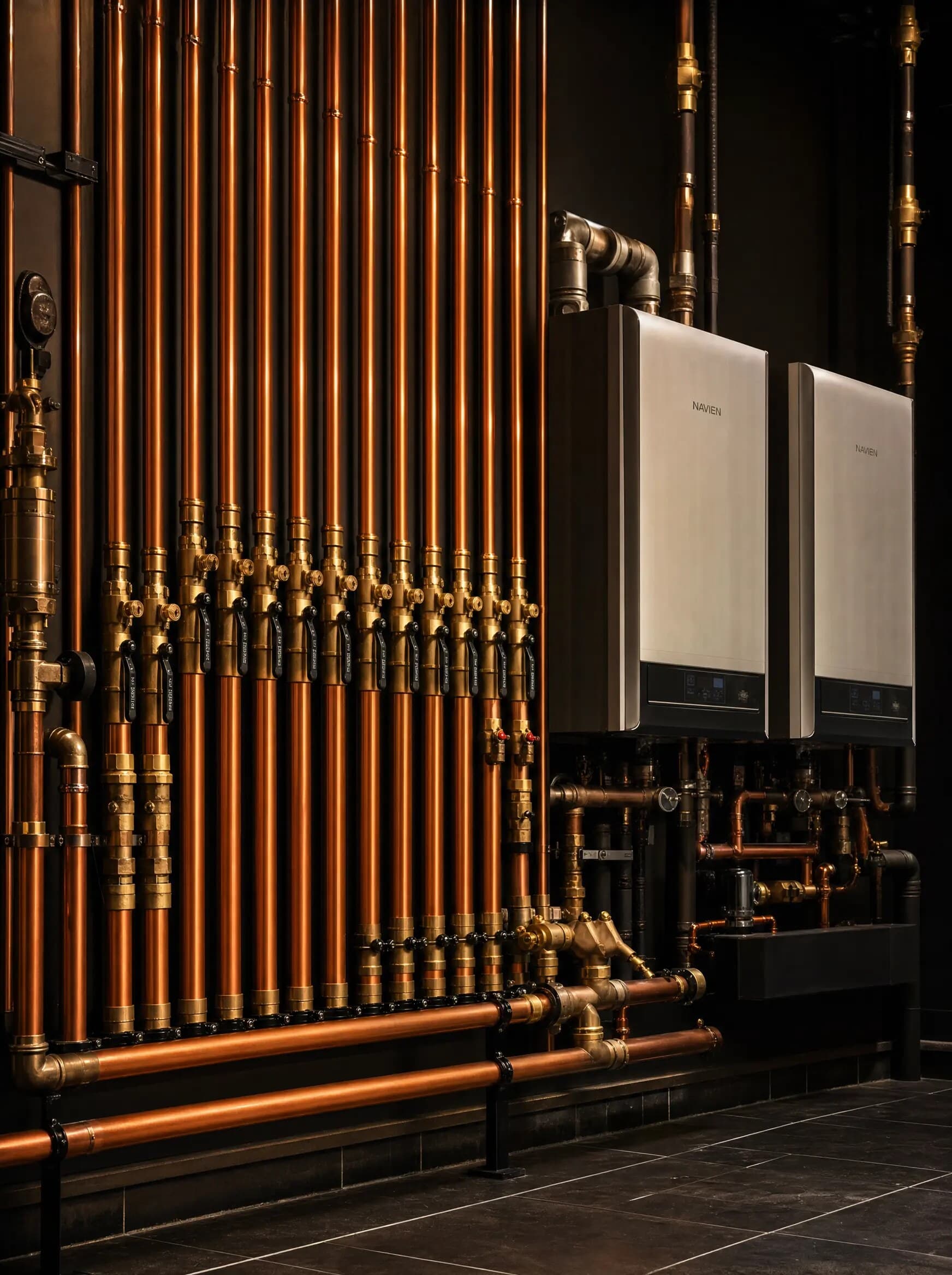
Water heaters
The morning the hot water goes, everything stops.
Repair, replacement and installation for tank, tankless, hybrid, gas and electric systems, with the venting, permits and bracing the city asks for.
Diagnosed before it is replaced.
A water heater that has stopped performing is not always a water heater that needs replacing. We start with the unit and the plumbing around it: gas or electrical connections, venting, thermostats, burners, relief valves, and whatever the sediment at the bottom of the tank has been doing to the heating elements. Then we tell you what a repair involves and what a replacement involves, and you choose.
Our vehicles arrive stocked, so a large share of repairs finish in one visit. When replacement is the better call, the constraints are usually the building rather than the equipment. Utility closets and garages in older San Francisco properties were built long before current standards, so clearance, venting paths, seismic strapping, expansion tanks and drain pan condition all shape what can go in. We handle the permits and coordinate with city inspectors.
We work on single-family homes, multi-unit buildings and commercial property, and our plumbers are trained to service premium and European-brand units.
The work
What we take on
Repair, after diagnosis
Thermostats, burners, ignition, relief valves, connections and sediment, tested before anything is quoted.
Tank replacement
Sized on capacity, efficiency and the space available, which in this city is usually the deciding factor.
Tankless installation
Water heated as it passes through the unit. We size it on your flow rate and peak demand rather than on the label.
Tank to tankless conversion
We assess venting, gas supply, electrical capacity and space before recommending the change.
Hybrid and high-efficiency units
Heat pump and high-efficiency models, with guidance on the rebates and incentives available.
Code and safety work
Seismic strapping, expansion tanks, drain pans, venting and code-compliant shut-off valves.
Permits and inspections
Replacements and certain upgrades need them. We pull the permits and meet the inspector.
Maintenance
Annual flush, anode rod replacement, and the temperature and insulation settings that lengthen the life of the unit.
Questions
What clients ask first
A tank that is leaking from corrosion has to be replaced. Past ten years with repeated repairs, replacement is usually the better spend. Traditional tanks last around eight to twelve years, tankless units up to twenty.
Flush the tank once a year to clear sediment, replace the anode rod every three to five years, and set the thermostat to about 120 degrees Fahrenheit. Insulating the tank reduces standby heat loss by 25 to 45 percent.
Sediment on the bottom of the tank reduces how much water it can hold, and a failing heating element or dip tube empties it faster than it should. Sometimes the household has simply outgrown the unit.
Yes. Most repairs do not need a permit, but replacements and certain upgrades do. We pull them, follow current San Francisco code and arrange the inspection.
Yes. Our plumbers are trained to service premium and European-brand water heaters, which turn up regularly in the custom homes we look after.

Begin
Tell us about the home. We’ll take it from here.
A consultation for your build, your remodel, or a place in the Membership. If it’s an emergency, call us now.